
ENG
In collaboration Laura Netz & Claude Mathr.
Sound is ever-present in the human and natural world, so we often do not notice it. Even in the city, there can be birdsong, and even in the countryside, aircraft can be heard. Field recording is a space-time machine; we can listen back later, in different places, and be transported back to the original environment. Listening in a different context can reveal sounds we didn’t notice before, even though they were always present. Recording nature is a way to document the changing world; the climate catastrophe may make her songs very different in the future.
Sound surrounds us continuously, in both human and natural environments. Because it is always present, we often stop noticing it. What we call “background noise” is, in fact, a complex, living acoustic world. Field recording is a practice of attentive listening — a way to focus on the unnoticed, the peripheral, and the ephemeral.
This project explores listening as an artistic and documentary act. Recordings are made in urban and rural environments, capturing overlapping sound layers: animals, weather, infrastructures, machines, voices, and resonant spaces. Cities contain birds and wind; the countryside contains aircraft and distant industry. These crossings reveal that environments are always hybrid and interconnected.
A field recording acts as a space-time document. It preserves an acoustic moment that can later be revisited in another place and context. When replayed, recordings often reveal sounds that were not consciously perceived during capture — distant movements, subtle rhythms, spatial depth, and hidden interactions. Listening again becomes a form of discovery.
The work also recognises sound recording as environmental memory. As ecosystems shift due to climate change and human activity, their sonic identities change as well. Species distribution, seasonal timing, and human noise patterns are transforming. Field recordings become traces of these transitions — archives of how places once sounded.
The project combines careful listening, portable recording technology, and minimal editing. The aim is not only to collect sounds but also to encourage deeper listening practices, inviting audiences to become more aware of their own sonic surroundings.
Field recording here is both method and message: listen closely, listen again, listen differently.
CAT
Una col-laboració de Laura Netz i Claude Mathr.
El so està sempre present al món humà i natural, de manera que sovint no ens n’adonem. Fins i tot a la ciutat es pot sentir el cant dels ocells, i fins i tot al camp es poden escoltar els avions. L’enregistrament de camp és una màquina espai-temps, podem tornar a escoltar més tard i en diferents llocs, i ser transportats de nou a l’entorn original. Escoltar en un context diferent ens pot sorprendre amb sons que abans no ens vam adonar, però que sempre estaven presents. Enregistrar la natura és una manera de documentar el món canviant, la catàstrofe climàtica significa els seus sons poden ser molt diferents en el futur.
El so ens envolta constantment, tant en entorns humans com naturals. Precisament perquè sempre hi és, sovint deixem de percebre’l. El que anomenem “soroll de fons” és en realitat un món acústic complex i viu. L’enregistrament de camp és una pràctica d’escolta atenta — una manera de dirigir l’atenció cap a allò que és perifèric, discret i efímer.
Aquest projecte explora l’escolta com a acte artístic i documental. Les gravacions es realitzen en entorns urbans i rurals, capturant capes sonores superposades: animals, clima, infraestructures, màquines, veus i espais ressonants. Les ciutats contenen ocells i vent; el camp conté avions i indústria llunyana. Aquestes interseccions mostren que els entorns són sempre híbrids i interconnectats.
Un enregistrament de camp funciona com un document espai-temps. Conserva un moment acústic que pot ser revisitat posteriorment en un altre lloc i context. En tornar a escoltar, sovint apareixen sons que no es van percebre conscientment durant la gravació — moviments llunyans, ritmes subtils, profunditat espacial i interaccions ocultes. Re-escoltar esdevé una forma de descoberta.
El projecte també entén la gravació sonora com a memòria ambiental. A mesura que els ecosistemes canvien per efecte del clima i l’activitat humana, també canvia la seva identitat sonora. La presència d’espècies, els cicles estacionals i els patrons de soroll humà es transformen. Els enregistraments de camp esdevenen rastres d’aquestes transicions — arxius de com sonaven els llocs.
El treball combina escolta curosa, tecnologia portàtil de gravació i edició mínima. L’objectiu no és només recollir sons, sinó fomentar pràctiques d’escolta més profundes — convidant el públic a prendre consciència del seu propi entorn sonor.
Aquí, l’enregistrament de camp és alhora mètode i missatge: escoltar de prop, tornar a escoltar, escoltar diferent.
Hardware
- Zoom H4n Handy Recorder
-
Zoom H1 Handy Recorder
-
AA batteries
-
headphones
Software
-
Audacity audio editor
Excerpts
Collaborations
Our field recordings have been exhibited at
2025 LCC Earth Week More than Human Stories, London, UK.
2025 IN-SONORA 2005 – 2025, Cruce Contemporaneo, Madrid, SP.
2024 Project DIVFUSE, London, UK.
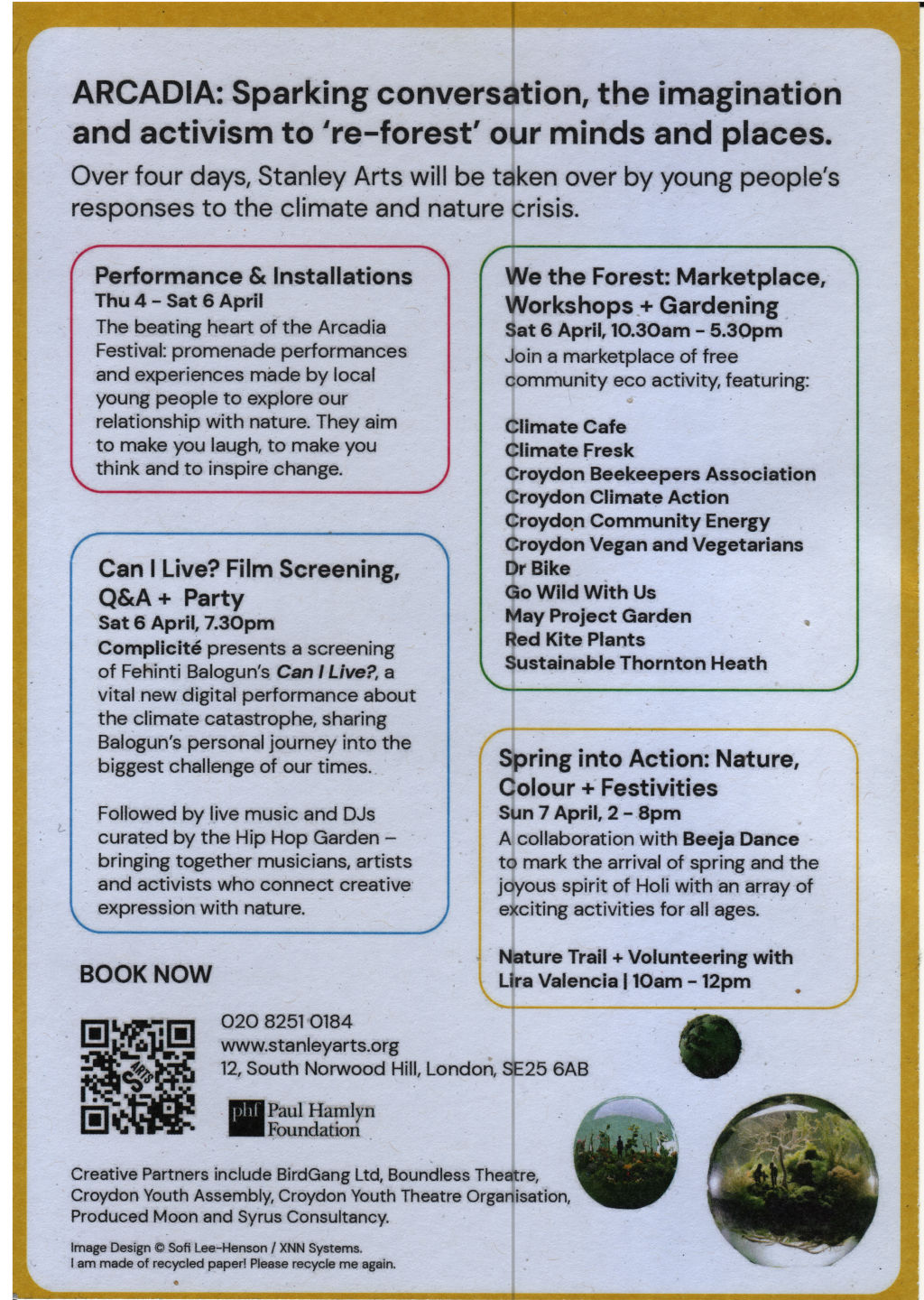
2024 Arcadia Festival, Stanley Arts, London, UK.
-
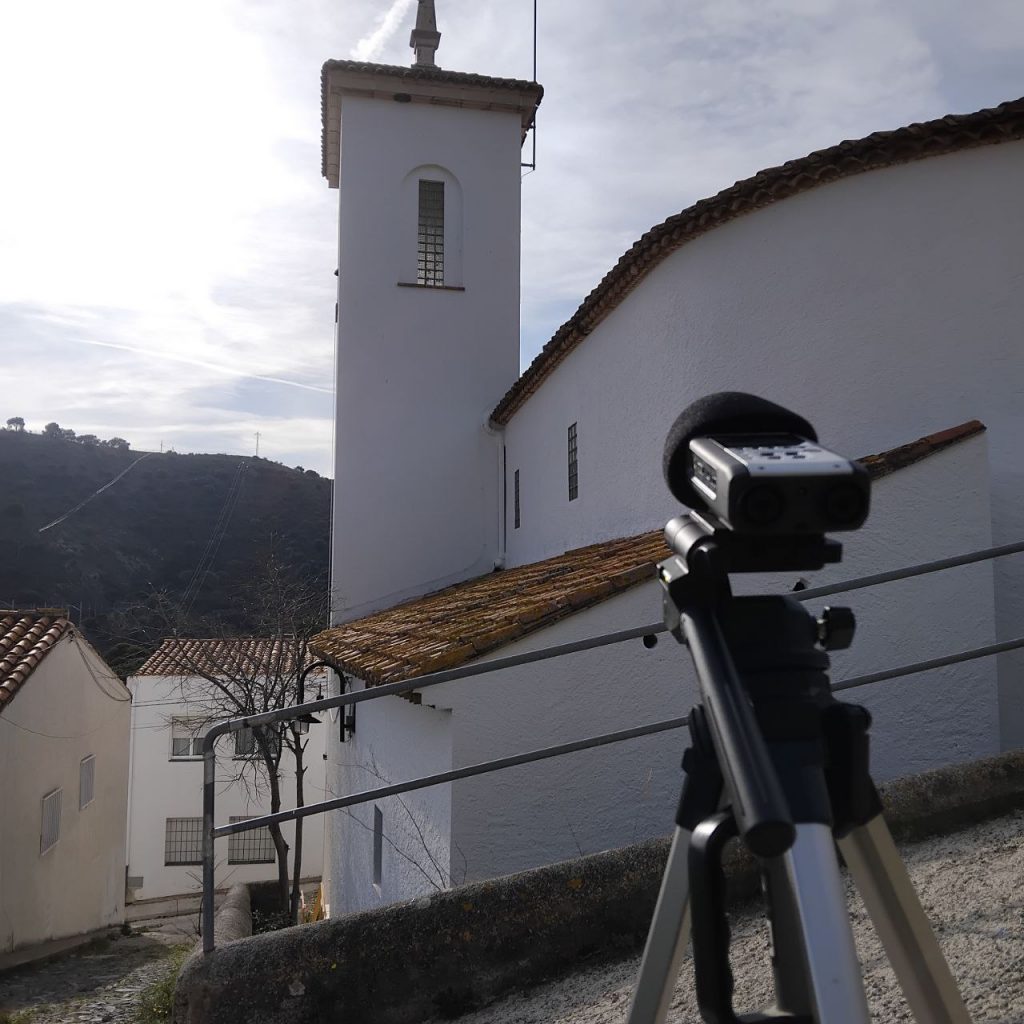
- Church
-
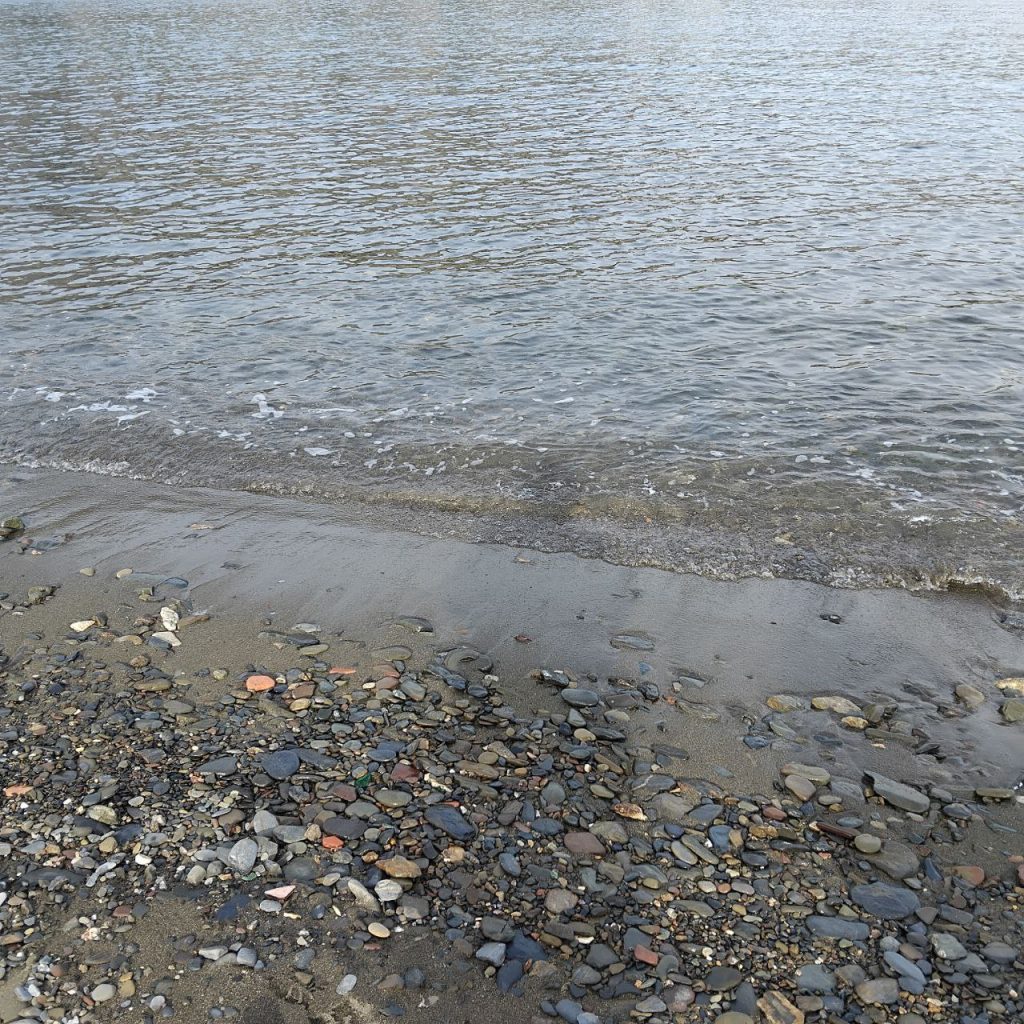
- Sea